1 What it is for
The template is the answer sheet for Intune applications. Everything in it is copied to each new Intune application that is made with the template.
Robopack has its own templates: Robopack Templates is the third page under Templates, described in Deployment templates.
- Install behaviour: whether the application installs for the device (System) or for the user (User), the MSI and script commands, the restart behaviour and the time allowed.
- Requirements: the Windows architecture, the minimum Windows release, free disk space, memory, processors and CPU speed.
- Groups: which Intune groups are made for each application (required, available and uninstall), and which group they are added to.
- Return codes: what each installer exit code means.
- Who can use it: the tenants the application is copied to, the package security groups that may see it, and the security roles that may use the template.
2 The page at a glance
Open Templates › Intune Application Templates in the menu. The page lists the templates you are allowed to see.
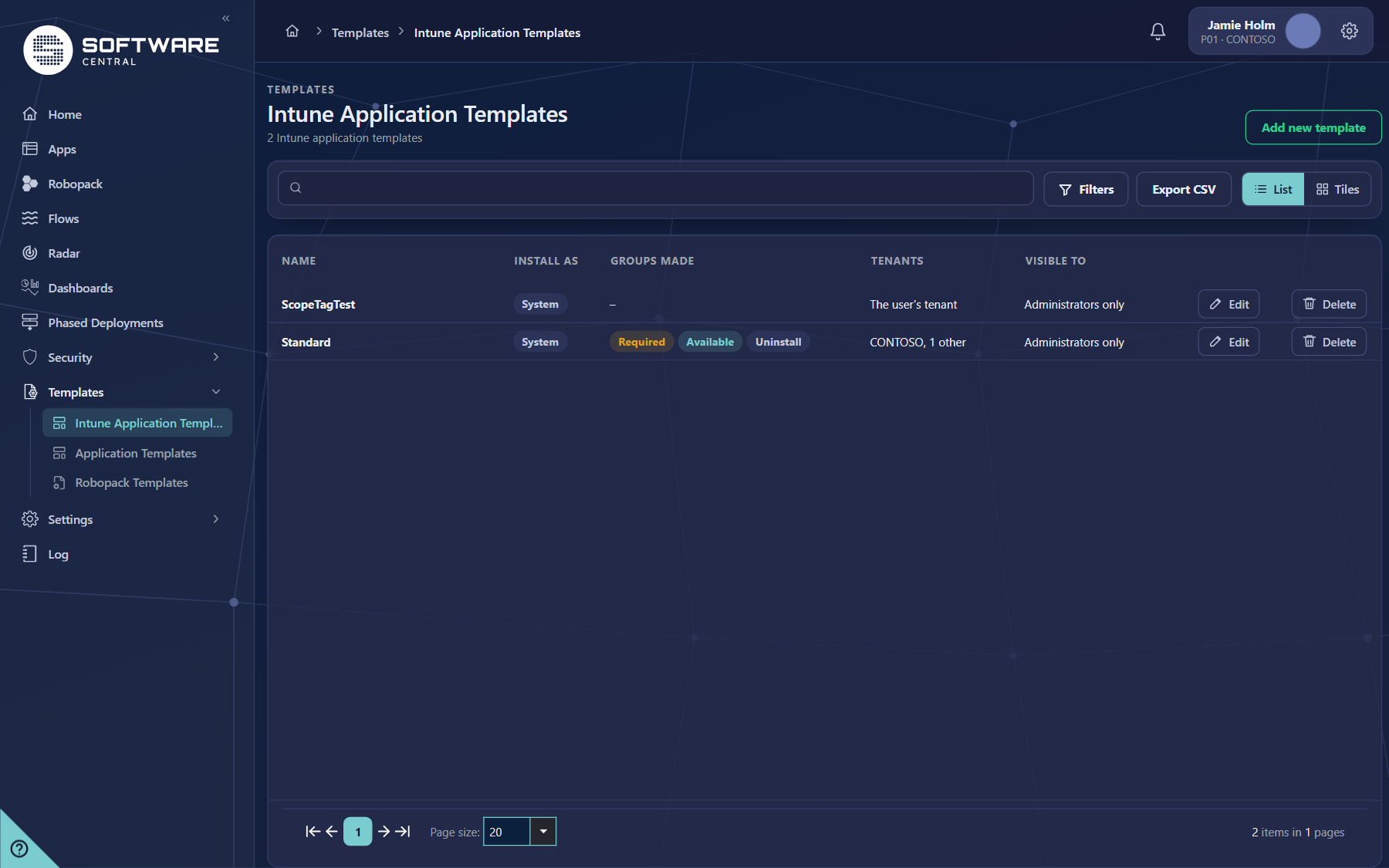
| Column | What it shows |
|---|---|
| Name | The template name. Click it, or Edit, to open the template window. |
| Description | The description shown in the Company Portal, or a dash when there is none. |
| Install as | System or User. |
| Groups made | Required, Available and Uninstall, one pill for each group the template makes. A dash when it makes none. |
| Tenants | The names of the tenants the application is copied to, up to three. With more, the count is shown and the full list is in the tooltip and the CSV file. The user's tenant means no other tenant is chosen. |
| Visible to | The security roles that may use the template, up to three names, or the count. A role marked (all templates) in the role filter sees every template. Administrators only means no role is given the template. |
The count above the list, for example 12 Intune application templates, follows the search and the filters. Use the List and Tiles buttons to change how the templates are shown.
3 Search, filters and export
- Search: type a part of the name in the box on the left and press Enter. Each search value becomes a token; a template is listed when its name contains every token. Remove a token with its cross.
- Filters: click Filters to open the panel. The number on the button shows how many filters are in use. Clear all filters resets them.
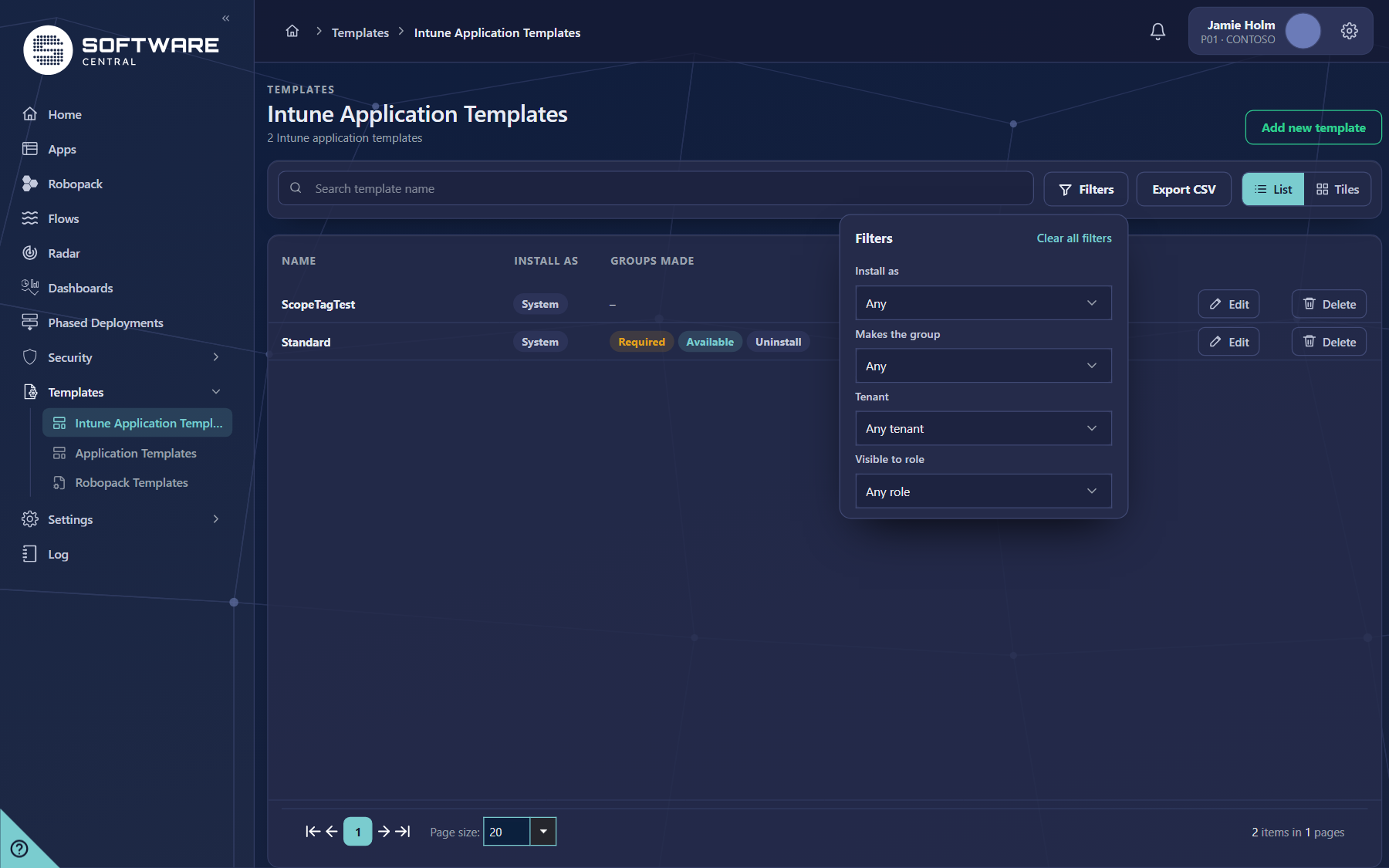
| Filter | Shows the templates that |
|---|---|
| Install as | install as System or as User. |
| Makes the group | make a Required group, an Available group or an Uninstall group, or No groups (none of the three). |
| Tenant | are copied to the chosen tenant. The list offers the tenants your role may use. |
| Visible to role | the chosen role may use. A role that sees all templates matches every template. |
The filters and the search work together: a template must match all of them to be listed.
4 The template window
Click Add new template to make a template, or Edit on a row to change one. The window has five tabs. Cancel closes it without saving. Save stores the template and closes the window.
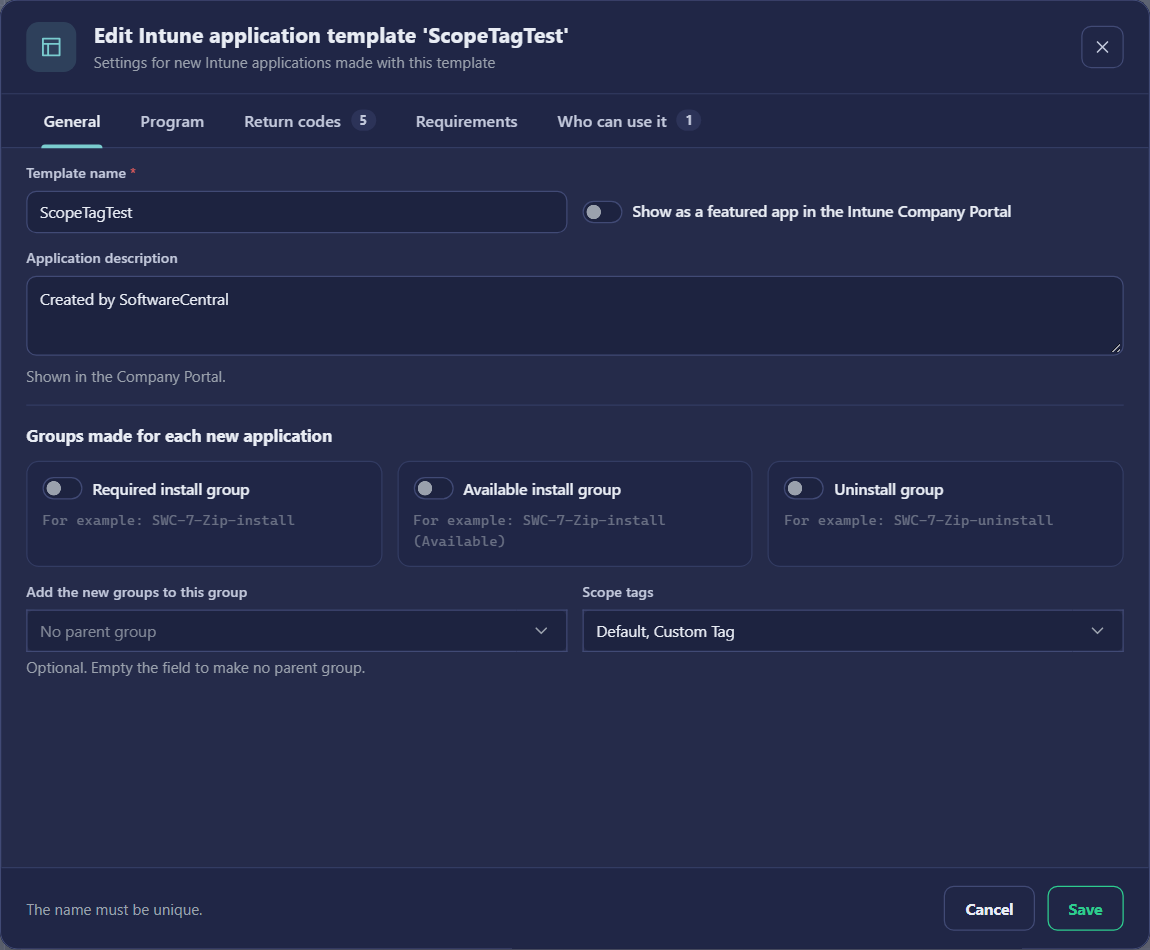
General
- Template name is required and must be unique (capital letters do not matter).
- Groups made for each new application: tick Required install group, Available install group and/or Uninstall group. The example under each switch shows the group name, built from the group prefix and suffixes set in Configuration.
- Add the new groups to this group (optional): the Intune group the new groups are added to. Empty the field for no parent group.
- Scope tags appear only when scope tags are switched on for Intune applications.
Program
- The MSI and Script / EXE install and uninstall command lines.
{file_name}is replaced with the installer file and{product_code}with the MSI product code when an application is made. - Install behavior (System or User), Device restart behavior, Installation time required in minutes, and Allow available uninstall.
Return codes
- A table of the exit codes and their meaning: Success, Failed, Soft reboot, Hard reboot or Retry.
- Add a code with its type. Use the Edit and Delete icons on a row to change or remove a code. Reset to standard puts back the standard list.
- The codes are saved with the template when you click Save; Cancel on the window drops the changes.
Requirements
- The architectures (32-bit, 64-bit), the minimum Windows release, free disk space in MB, physical memory in MB, logical processors and CPU speed in MHz. Leave a field empty for no requirement.
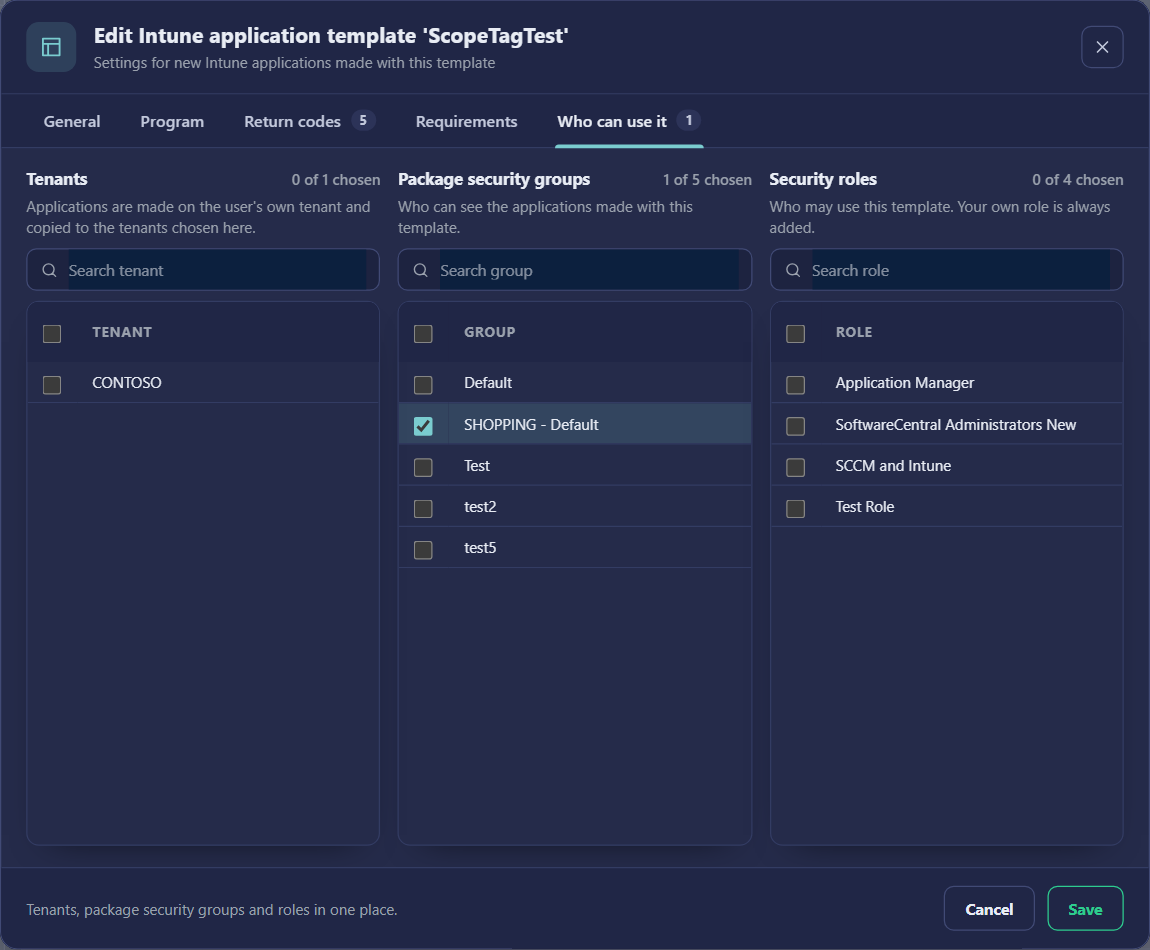
Who can use it
- Tenants: applications are made on the tenant of the user, and copied to the tenants chosen here. Only the tenants your role may use are listed.
- Package security groups: who can see the applications made with this template.
- Security roles: who may use this template. The role you are signed in with is always added.
5 Fields and buttons
| Control | What it does |
|---|---|
| Add new template | Opens an empty template window. |
| Search | Finds templates by name. Press Enter to add the search value as a token. |
| Filters | Opens the filter panel. Clear all filters resets it. |
| Export CSV | Downloads every matching template with the Template ID, the full tenant and role lists. |
| List / Tiles | Changes the view. Tiles show each template as a card. |
| Edit | Opens the template window for the row. |
| Delete | Opens the Delete window for the template. |
| Cancel / Save | In the template window: leave without changes, or store the template and close the window. Save refuses an empty name and a name that another template already uses. |
6 Best practices
| Topic | Recommendation |
|---|---|
| One template per kind of application | For example one for MSI installers and one for EXE installers with silent switches. A template with a name that says what it installs is easier to choose later. |
| Name the template clearly | Use the application or the kind of install in the name, so the name is enough to choose the right one when you create an application. |
| Limit who can use it | Give the template to the roles that need it under Who can use it. Keep templates for testing away from roles that deploy to everyone. |
| Check the groups | Look at the example group names before you save, so the groups are named the way your team expects. |
| Set return codes once | Start from Reset to standard and add only the codes your installer uses. A wrong reboot type causes a restart that users do not expect. |
| Keep a template ID list | Use Export CSV to keep a copy of the templates and their IDs. The file is what other tools need. |
| Use the filters for review | Filter by Visible to role to see what a role can use, or by Tenant before you change a tenant's templates. |
7 Troubleshooting
| Symptom | Cause and what to do |
|---|---|
| No templates match your criteria | The search or a filter hides every template. Click Clear all filters and clear the search tokens. |
| A template is not in the list | The list shows only the templates your role may use. Ask an administrator to check the Who can use it tab of the template, or your role on the Security roles page. |
| Template name cannot be empty. | Type a name in Template name on the General tab. |
| A template with the same name already exists. | Names are compared without capital letters. Choose another name. |
| The return code is not a valid number. | The code must be a whole number, for example 3010. Correct it and click Add or Update. |
| This return code is already assigned. | Each code can appear only once. Change the existing row instead of adding it again. |
| The group examples show the wrong names | The prefix and suffixes come from Configuration. Change them there; the examples follow. |
| Tenants shows The user's tenant | No other tenant is chosen. This is normal: applications are made on the tenant of the user only. |
| Visible to shows Administrators only | No role has been given the template. Only administrators see it until a role is added on the Who can use it tab. |
| The CSV file has fewer templates than the page | The export follows the search and filters. Clear them, then export again. |